
When London introduced its Congestion Charge in 2003, many critics assumed it would simply push traffic elsewhere. Instead, traffic volume dropped 26%, bus ridership climbed 37%, and the scheme generated a £122 million surplus reinvested directly into public transit. That result did not happen by accident. It happened because skilled planners thought far beyond road capacity and applied a rigorous, evidence-based approach to how people and goods move through cities. This article explains what transport planning actually is, the principles that underpin it, and the measurable outcomes it can deliver when done well.
Table of Contents
- Defining transport planning: core concepts and why it matters
- Key principles and methods of effective transport planning
- Real-world impacts: case studies and measurable outcomes
- Current challenges and future trends in transport planning
- What most people miss: the bridge between theory and transformative outcomes
- Advance your transport planning career
- Frequently asked questions
Key Takeaways
| Point | Details |
|---|---|
| Strategic planning matters | Thoughtful transport planning leads to less congestion, smarter cities, and lower environmental impact. |
| Integration is key | Linking transport with land use and sustainability creates stronger, more resilient networks. |
| Real success is measurable | Effective planning can deliver major results, such as a 26% traffic drop or 80% emission cut. |
| Future-ready skills needed | Adapting to technology and equity challenges is vital for modern transport planners. |
Defining transport planning: core concepts and why it matters
Transport planning is the professional discipline concerned with designing, analysing, and improving systems that allow people and goods to move safely, efficiently, and sustainably. It operates at every scale, from a local cycle route to a national rail strategy. Understanding what transport planners do is the first step to appreciating why cities and regions invest so heavily in the profession.
A common misconception is that transport planning and traffic engineering are the same thing. They are closely related, but the distinction matters. Traffic engineering focuses primarily on the technical design of roads, junctions, signal timings, and physical infrastructure. Transport planning takes a broader, more strategic view. It asks questions like: Where do people want to travel and why? What modes should be available? How do housing locations affect commuting patterns? What happens to a town’s economy if a bypass is built?
Modern transport planning is deeply integrated with land use planning. The integrated approach links transport with land use to reduce vehicle miles travelled (VMT), cut greenhouse gas (GHG) emissions, support multimodal options, and address equity and health issues arising from car-centric development. When housing, employment, retail, and public space are designed with movement in mind, the whole network performs better.
Here are some essential terms you will encounter throughout the field:
- VMT (vehicle miles travelled): A measure of total distance driven by all vehicles, used to gauge road demand and emissions.
- GHG (greenhouse gas): Emissions from transport, primarily carbon dioxide, that contribute to climate change.
- Multimodal: Networks that offer more than one mode of transport, such as walking, cycling, bus, rail, and car together.
- Equity: Ensuring that transport networks serve all communities fairly, including low-income groups and people with disabilities.
- Demand forecasting: Predicting future travel volumes using models that account for population growth, land use, and economic change.
- Mode share: The percentage of trips made by each type of transport within a given area or corridor.
Pro Tip: If you are new to transport planning, focus on understanding demand forecasting first. It underpins almost every other planning decision and is consistently cited by senior professionals as the skill that separates good planners from great ones.
Key principles and methods of effective transport planning
Once you understand the basics, it is important to know the principles and practical steps experts follow. Effective transport planning is guided by four overarching objectives: efficiency, sustainability, accessibility, and resilience. These goals sometimes pull in different directions, which is precisely why planners must be skilled in balancing competing interests.
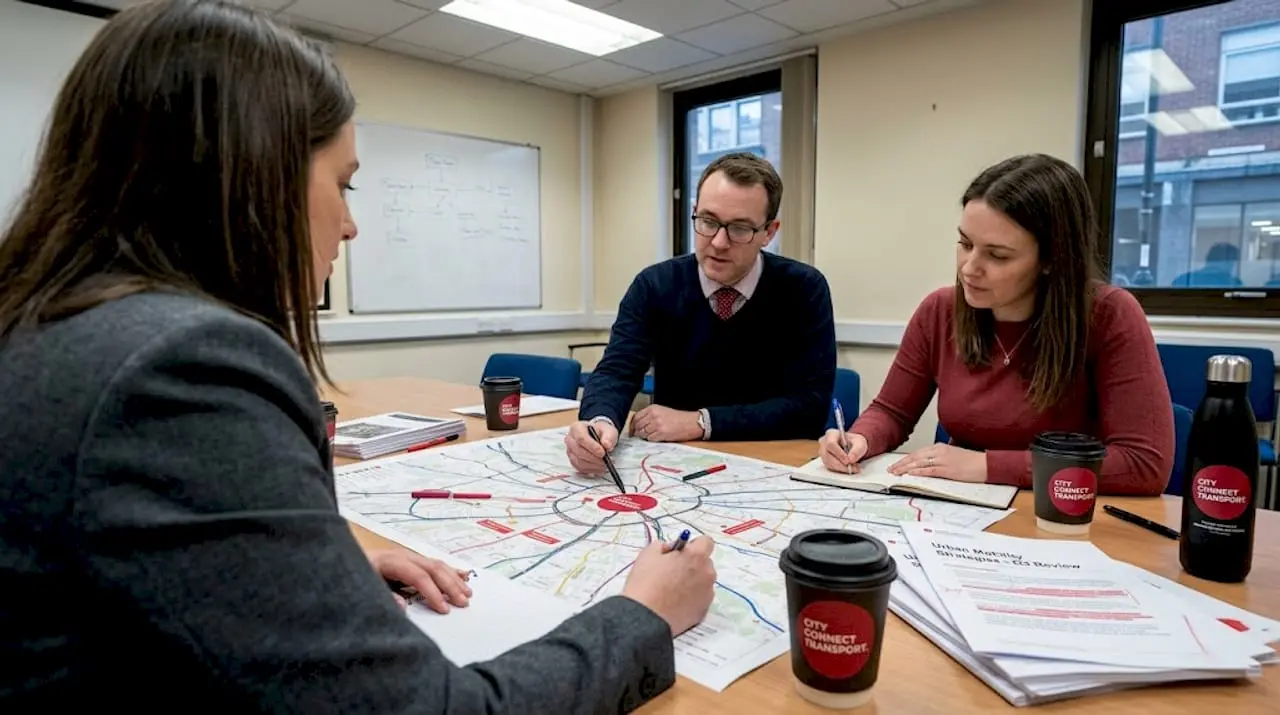
Efficiency means that networks move people and goods with minimal delay and waste. Sustainability means that the system does not compromise the environment or future generations. Accessibility means that the network is usable by everyone, regardless of age, income, or physical ability. Resilience means that the network can cope with disruption, whether from extreme weather, economic shocks, or a global pandemic.
A typical transport planning process follows these key stages:
- Define the problem. What travel need is unmet? Where are the bottlenecks, gaps, or safety issues? Data collection and stakeholder interviews begin here.
- Set objectives. What does success look like? Reduced journey times? Lower emissions? Improved public transport frequency?
- Develop options. Planners model different interventions, ranging from minor junction improvements to entirely new transit corridors.
- Assess impacts. Environmental impact assessments, economic appraisals, and equality impact analyses are carried out.
- Consult stakeholders. Public consultation, engagement with businesses, local authorities, and transport operators shapes the plan.
- Select and implement. The preferred option is costed, funded, and delivered in phases.
- Monitor and adapt. Post-implementation monitoring checks whether outcomes match predictions. Plans are revised accordingly.
The tools planners use at each of these stages vary widely. Here is a comparison of the most commonly used methods:
| Method | Purpose | Strengths |
|---|---|---|
| Travel demand modelling | Forecasting future trip volumes | Reveals network-wide impacts |
| Environmental impact assessment | Measuring ecological and health effects | Satisfies regulatory requirements |
| Cost-benefit analysis | Weighing financial returns against costs | Supports funding decisions |
| Stakeholder engagement | Gathering community needs and concerns | Builds public trust and acceptance |
| Congestion pricing analysis | Evaluating demand management tools | Reduces VMT and emissions directly |
| Scenario planning | Testing plans against uncertain futures | Improves resilience and flexibility |
Policy levers are another essential part of the planner’s toolkit. Congestion pricing, fuel taxes, electric vehicle incentives, and public transport subsidies all shift travel behaviour in measurable ways. Empirical evidence confirms that emissions cuts of 74 to 80% are achievable through combined electrification and demand management scenarios. That is a striking figure, and it underscores why planners who understand both the technical and policy dimensions of transport are so valuable.
Keep an eye on industry news to stay current with the evolving policy landscape, especially as governments accelerate their net zero commitments.
Pro Tip: When presenting planning options to decision-makers, always lead with the problem, not the solution. Stakeholders engage far more readily when they understand what is going wrong and why before being asked to evaluate remedies.
Real-world impacts: case studies and measurable outcomes
Now let us see how these approaches play out in real life, supported by solid numbers and success stories.
London remains the most frequently cited example of demand management done right. When the Congestion Charge launched in central London, sceptics predicted gridlock on surrounding roads. Instead, traffic volume dropped 26% within the charging zone, bus ridership rose by 37%, and the £122 million surplus generated was reinvested into bus networks and walking infrastructure. The success relied not just on the pricing mechanism itself, but on the simultaneous investment in bus frequency and capacity. Without that parallel investment in bus networks and urban travel, drivers would have had nowhere credible to switch to.
The contrast with poorly coordinated cities is stark. Research on global urban congestion shows that emissions can increase up to 300% when demand rises by just 50% without complementary planning interventions. That is not a linear relationship. It is exponential. Congestion compounds itself as vehicles slow down, engines idle, and people divert onto secondary roads that were never designed for heavy traffic.
“Cities that invest in resilient, integrated transport networks do not just move people more efficiently. They reduce the economic cost of lost time, lower public health burdens from air pollution, and build the kind of liveability that attracts skilled workers and investment.”
Tel Aviv provides a useful case study in resilience planning. The city has implemented adaptive traffic management systems and multimodal contingency routes, meaning that when one part of the network is disrupted, demand can be redistributed rather than simply absorbed as delay. Resilient cities like Tel Aviv handle demand surges better and recover more quickly from disruption than cities that have invested only in capacity expansion.
The measurable positive impacts of well-executed transport planning include:
- Reduced journey times for both private and public transport users.
- Lower rates of road traffic casualties through safer network design.
- Improved air quality in urban areas, leading to measurable public health gains.
- Increased economic productivity from reduced freight delays and better labour market access.
- Greater social inclusion as communities previously cut off by poor transport gain connectivity.
- Carbon emission reductions that contribute directly to national climate targets.
For those exploring graduate opportunities in transport, these outcomes represent not just statistics but genuine impact you can contribute to from the early stages of your career.
Current challenges and future trends in transport planning
With real-world examples in mind, it is crucial to understand the evolving challenges and future direction of the field.
Transport planning in 2026 operates against a backdrop of intersecting pressures. Climate change, rapid urbanisation, funding constraints, and the uneven distribution of transport benefits all demand urgent attention. The integrated approach linking land use and transport remains the most robust framework for addressing these challenges, yet it is still far from universally adopted.
The major challenges currently shaping the profession are:
- Climate action: Transport accounts for roughly a quarter of global carbon emissions. Planners are now expected to embed decarbonisation targets into every strategy, not treat them as an add-on.
- Equity and access: Car-centric planning has historically disadvantaged low-income communities, older people, and those with disabilities. Addressing these gaps requires targeted investment and careful analysis of who benefits from infrastructure decisions.
- Funding constraints: Public budgets are under pressure across the UK and internationally. Planners must make compelling economic cases for investment and explore alternative funding models such as developer contributions and value capture.
- Public engagement: Communities are increasingly sceptical of large infrastructure projects, particularly where past schemes have caused harm. Meaningful engagement, not tokenistic consultation, is now an essential professional skill.
- Post-pandemic travel patterns: Remote and hybrid working has permanently altered peak travel demand in many cities. Planners are re-evaluating frequency and capacity models built on pre-2020 assumptions.
Stat to know: Electric vehicles currently make up a growing share of new car sales across Europe, but electrification alone will not solve congestion. A battery-powered car stuck in traffic still occupies the same road space as a petrol one.
The emerging technologies reshaping the field include automated vehicles, demand-responsive transit, shared mobility platforms, and digital twin modelling, where a virtual replica of a transport network is used to simulate interventions before they are built. These tools offer enormous potential, but they also introduce new risks around data privacy, algorithmic bias, and the digital exclusion of those without smartphones or internet access.
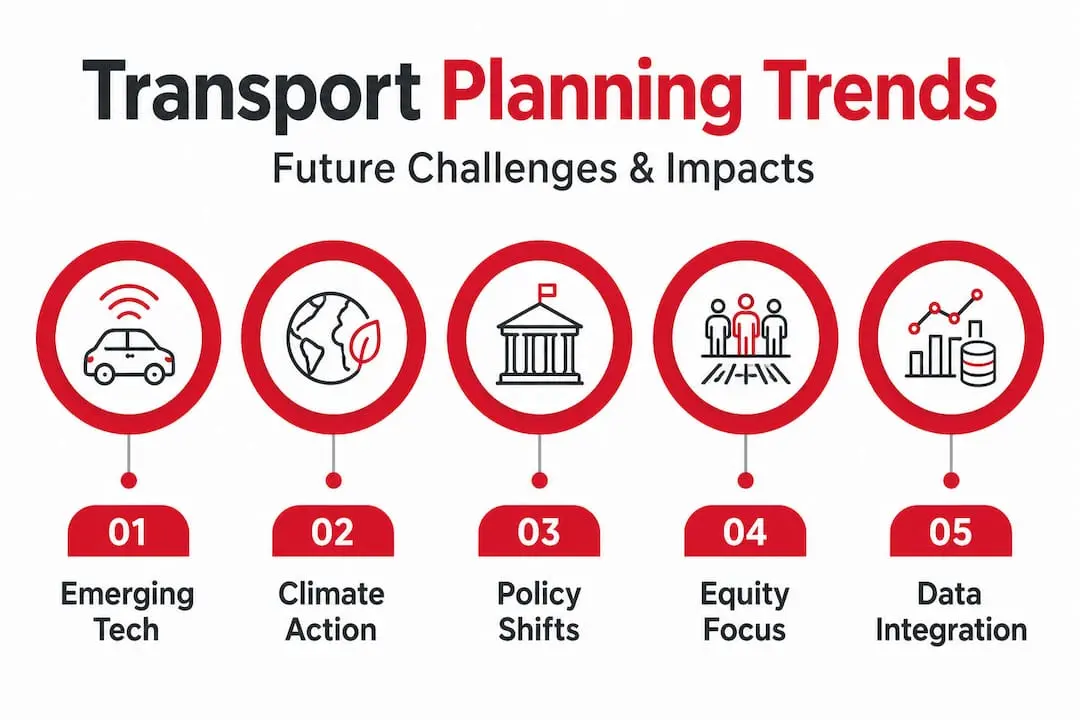
Understanding transport industry standards around these emerging technologies is increasingly important for professionals at every level, from graduate analysts to senior project directors.
What most people miss: the bridge between theory and transformative outcomes
Having considered present and future issues, let us reflect on what separates standard plans from outstanding transformations.
There is a persistent belief in the profession that following best practice frameworks is enough. Adopt the right methodology, use an approved model, tick the consultation boxes, and the plan will work. Experienced planners will tell you that this belief is wrong, and sometimes dangerously so.
Cities are not engineering problems with clean solutions. They are living systems shaped by politics, memory, culture, and trust. A technically excellent plan will fail if the communities it affects do not believe the planner understands their lives. We have seen this repeatedly with major road schemes that met all technical requirements but generated years of litigation and protest because local knowledge was treated as an obstacle rather than an input.
The most underrated skill in transport planning is the ability to build genuine feedback loops. Not the statutory consultation that ticks a regulatory box, but the ongoing relationship with residents, operators, and local businesses that allows a plan to adapt as it is implemented. The London Congestion Charge succeeded in part because Transport for London monitored outcomes transparently and adjusted the scheme over time. The data was public. The learning was visible.
Check transport sector updates regularly if you want to see how leading organisations are incorporating adaptive management into live projects. The shift from static plans to living strategies is one of the most significant professional developments of the past decade.
What drives lasting impact? Humility about what models cannot predict, genuine curiosity about how different communities experience the network, and a willingness to revise rather than defend earlier conclusions. The planners who shape cities for decades are not the ones who got everything right first time. They are the ones who built systems that could learn.
Advance your transport planning career
Transport planning is one of the most consequential fields in the built environment sector, and demand for skilled professionals continues to grow as cities pursue ambitious net zero and active travel targets. Whether you are a student looking for your first role or an experienced planner seeking new challenges, the opportunities are substantial.
Jobs-in-Transport.com has been connecting transport professionals with employers since 2005, covering roles across highways, traffic management, planning, technology, and project delivery. Browse current transport planning jobs to find positions matched to your specialism and experience level. You can also learn more about about Jobs-in-Transport.com and how the platform supports your job search with CV hosting, tailored alerts, and a dedicated focus on the transport sector. The next step in your career could be one search away.
Frequently asked questions
What skills are needed for a career in transport planning?
Transport planners benefit from strong analytical thinking, clear communication, proficiency in transport modelling software, and a solid understanding of sustainable design principles. An ability to engage effectively with diverse stakeholders is equally important in practice.
How does transport planning differ from traffic engineering?
Transport planning takes a strategic view of travel systems, policies, and land use relationships, while traffic engineering focuses on the technical design of roadways and junctions. The integrated approach linking transport with land use is central to modern planning but less central to engineering.
Can transport planning help address climate change?
Yes, and significantly so. Policy choices such as congestion pricing and electrification combined with demand management can cut emissions by 74 to 80% in some modelled scenarios.
What is a successful example of transport planning?
London’s Congestion Charge is one of the most studied examples globally. It resulted in a 26% traffic reduction and a 37% increase in bus ridership, with the surplus reinvested into public transit improvements.
What are the main challenges facing transport planners today?
Planners currently face rising urbanisation and equity concerns, funding pressures, rapid technology shifts including automation and shared mobility, and the need to integrate climate action into every aspect of network strategy.


